Help Sitemap Home Skip Navigation Contact Us Disability Statement


Malt island

Click on thumbnail to view image

Published Date: 29 December 2007
ISLAY IS A whisky lover's paradise. The island is 600sq km, home to around 3,400 people and boasts eight distilleries, each with its own distinct history and character. Sampling the malt whisky produced on Islay is to drink in the culture and history of this remote and wild place.

Whisky tourism has developed on the island and all the distilleries are open for tours. We were determined to get to every one during our few days on the island, even if we had to crawl to the finish line. We embarked upon our epic task in the south
of the island, with the three distilleries in the picturesque Kidalton area.

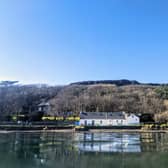
Laphroaig (La-froig) was our first taste. The pristine whitewashed buildings of the Laphroaig distillery nestle in a sheltered bay. Andrew Jefford, author of Peat, Smoke and Spirit, describes the whisky produced here as "both savage and pretty". When we saw the picturesque, seaweed-strewn bay where the spirit has its "long sleep" toward maturation, it is easy to account for the unique character of this Islay malt. Our Laphroaig tour often felt like an adult version of Willy Wonka's chocolate factory. We were urged to scoop up barley from the malting floors to chew, and we dipped our fingers into the spirit safe to taste the new spirit that flowed through. In one barn a drip from the ceiling turned out to be whisky leaking from a pipe and we all turned our heads to steal illicit mouthfuls. As I chatted with our guide, Jack, about the peat used by the distillery he pointed to a huge barn filled with blocks of it and told me to help myself. Thanks to him I look forward to sipping a Laphroaig in front of an Islay peat fire.

Further along the road is Lagavulin (Lagga-vool-in), which occupies another enviable position with a view of Dunyvaig Castle. A peat-darkened stream flows into Lagavulin, carrying the water from Sholum Lochs, the distillery's water source. This is a historic spot: the castle dates from the 14th century, and stills of an illicit nature have been recorded here since the 1700s. Lagavulin dates from 1816. The pier that remains part of the distillery harks back to the days when "puffers" would bring barley, coal and casks to the distillery. Now island traffic is mainly on the roads. Our tour of the busy distillery – in production 24/7 – ends in a mock "cosy" living room, with a dram.

Ardbeg is the last of the distilleries in this area and a good place to pause for lunch. We started our first tour at 10:15am, so the need for some food to soak up the booze was becoming urgent. The Kiln cafe at Ardbeg is a popular stopping-off point for those on the whisky trail. Our lunch was simple and satisfying and served by the guide who had just shown us the distillery. Ardbeg has a checkered history – it closed in 1981, and struggled to reopen several times before being rescued by Glenmorangie and restored to its full glory in 1997.

The next day we headed north across a flat expanse of peat bog, past the tiny Islay airport to Bowmore. Dating from 1779 Bowmore is the oldest of all the island's distilleries and lies in the centre of the small town of the same name. It's owned by the Japanese Suntory Company and the tour is briskly efficient, like Bowmore itself. The heated water, used in the mashing and washing processes is reused to heat the visitors' centre and the public swimming pool next door, which was built in a former Bowmore warehouse. In the sleek visitor area we sipped whisky overlooking Loch Indaal. It was an authentic Islay experience, needlessly embellished by piped-in fiddly dee dee music.

Heading away from Bowmore and following the curve of Loch Indaal our next stop was Bruichladdich (Bruch-Laddie). It faces Bowmore across the loch and has cultivated a militant reputation by branding itself "the only independent Islay distillery" and "the distillery with attitude". For all this stridant talk it's a friendly and relaxed place with a very different vibe from the polished tour at Bowmore. The Bruichladdich owners are strongly opposed to the "tartan twee" version of whisky tourism. Closed in 1994 Bruichladdich began distilling again in 2001– with a manifesto. The Bruichladdich philosophy is based on it being 100 per cent privately owned, staffed and run by locals, barrelled and bottled on the island, non-chill filtered, colouring free – and many other things besides. The original Victorian equipment still gleams in the distillery: clearly Bruichladdich subscribes to the French proverb, "It is in old pans that one does the best cooking."

The establishment of Kilchoman in 2005, the first new distillery on the island for more than 124 years, usurped Bruichladdich's title as the most westerly distillery. Kilchoman is a farm distillery, of which there were once many on the island. The names Octomore, Scarrabus, Coullabus, Daill and Lossit remain as ghostly reminders of the farm communities which are now sadly reduced in numbers. As debate rages over how long whisky should remain on the island to truly earn the Islay malt status, Kilchoman aims for authenticity by growing its own barley, malting it, then barrelling and bottling the whisky on the small Rockside farm where the distillery is based. The first five-year-old Kilchoman will not be bottled until 2011.

Malcolm Rennie, the distillery manager, let us take a tour and sample the new spirit of this essentially anachronistic venture. In my view, it's bursting with potential and will hold its own amidst the well-established Islay malts.

Our final day of distillery touring was in the northern reaches of Islay where the wild expanse of Jura begins to dominate the horizon.

Caol Ila, and Bunnahabhain occupy remote positions facing Jura across the Sound of Islay. Caol Ila (Coll Eela) occupies the most utilitarian distillery buildings – rebuilt in the 1970s – but has the most arresting views. The huge copper stills enjoy an uninterrupted view of the Paps of Jura through giant windows. Caol Ila is the biggest producer on the island, with 90 per cent of its spirit being whisked away for blending. Unlike Kilchoman and Bruichladdich, Caol Ila's whisky is never barrelled on Islay but is pumped into tankers and transported to the mainland.

Bunnahabhain (Boo-na-ha-ven) is even more remote, along a perilous single lane road which twists and turns before dropping steeply to the distillery on the shore. Its location seems odd, but, as our guide later reminds us, when Bunnahabhain was established, in 1881, traffic travelled by sea. There is a village feel to the distillery as up until the 1970s a sizeable community of workers and their families lived here. The current staff, now just 11 of them, still live in distillery houses.

Marketed as "the gentle taste of Islay", Bunnahabhain is the least peaty of the Islay malts. We were lucky enough to be taken on our tour by distillery manager John Maclellan, who has worked here for over 17 years. John is intimately involved in the mechanics of whisky production and his tour was filled with knowledge and passion.

The alchemy of nature has made Islay one of the most important whisky-producing areas in the world. What exactly makes it so special is widely disputed. Is it the peaty water used to distil the spirit, or the briny air that mingles with the maturing spirit as the "angels' share" evaporates? Is it the peat itself, lashed with seawater that gives Islay malts their unique character? There are no definitive answers and no greater pleasure than to ponder these questions with a malt in hand after a day on Islay. sm

Factfile: Islay

HOW TO GET THERE

• CalMac operates from Kennacraig to Port Ellen/Port Askaig. A five-day saver return costs £11.60 (foot passenger) and £64 (for a car). Tel: 0800 066 5000, www.calmac.co.uk

• BA flights from Glasgow to Islay airport from around £100 return. Visit www.britishairways.com

WHERE TO STAY

• Harbour Inn Bowmore. B&B from £110 per night. Tel: 01496 810330, e-mail: info@harbour-inn.com

• Port Askaig Hotel. B&B singles from £39 per night; doubles £90 per night. Tel: 01496 840245, e-mail: hotel@portaskaig.co.uk

n Port Charlotte Hotel. B&B singles from £75 per night; doubles £120 per night. Tel: 01496 850360l, e-mail: info@portcharlottehotel.co.uk

AND THERE'S MORE

• Tour prices for the distilleries range from £2-£5, which includes a dram. Check opening dates and times. Laphroaig (01496 302418); Lagavulin (01496 302730); Ardbeg (01496 302244); Bowmore (01496 810671, www.bowmore.co.uk); Bruichladdich (01496 850221); Kilchoman (01496 850011); Caol Ila (01496 302760); Bunnahabhain (01496 840646).

• Scotsman Reader Holidays (tel: 0131-620 8400, www.holidays.scotsman.com) has a four day trip to Islay, departing 4 April 2008, from £495.


Page 1 of 1


Sister Newspapers:
Press Complaints Commission

This website and its associated newspaper adheres to the Press Complaints Commission’s Code of Practice. If you have a complaint about editorial content which relates to inaccuracy or intrusion, then contact the Editor by clicking here.

If you remain dissatisfied with the response provided then you can contact the PCC by clicking here.