Published Date:
03 June 2005
By JULIAN SPALDING
IT'S COME TO a pretty pass. The only thing the Press can say about the Turner Prize shortlist, announced yesterday, is that it isn't controversial. One of the nominees even paints flowers in vases. How shockingly un-shocking can you get?
Has the Turner Prize finally run out of steam? I can't be alone in hoping and praying that it has. The sooner it's stopped and totally rethought the better.
There's a point in having prizes for art. They help raise its profile. The Man Booker has certainly got more people reading contemporary novels and its increased public debate about what quality is in literature. This can't be bad. But, in the end, it earns this extra attention at a price. It reduces art to a race.
A prize implies that there are winners and losers in art. There are certainly greater and lesser artists, but they're not like runners with all their efforts directed towards the same finishing line.
Artists try to express what they personally feel to be true and it's the freshness and depth of their vision that adds so much to our lives. It makes no more sense to say that Leonardo is better than Michelangelo than it does to say an oak is better than an ash. So, why have art prizes at all?
At least the Man Booker is about specific novels, not writers in general. It's possible, up to a point, to compare how well individual books are written, given the different visions of their authors, and the beauty about the Man Booker is that you can read the novels yourself and see whether or not you agree with the judges.
But the Turner is not about individual works of art. Winners are chosen on their artistic merit in general - which is about as easy as nailing a blancmange.
Most people assume the Turner prize is like the Man Booker, but it's a vastly different animal. If the Man Booker is like a bear stumbling around the forest searching for honey - its claws and clumsiness exposed for all to see - then the Tuner is like an amoeba - shifty in both shape and purpose. The Man Booker is a product of a very public process. A new chair and panel of judges is announced every year; countless publishers eagerly promote their books which the public are already reading. There's endless backstairs lobbying, of course, but, on the whole, the independent integrity of the judging process has been sustained. If it wasn't the whole charabanc would be derailed.
The Turner is clandestine. It's awarded not by the Tate, which most people assume, but by a shady group of Patrons of New Art, whose main task is to help the Tate acquire contemporary art, and who, not surprisingly, have numbered among their members many of the leading dealers in contemporary art. Hardly the right organisation to guarantee independence of judgment.
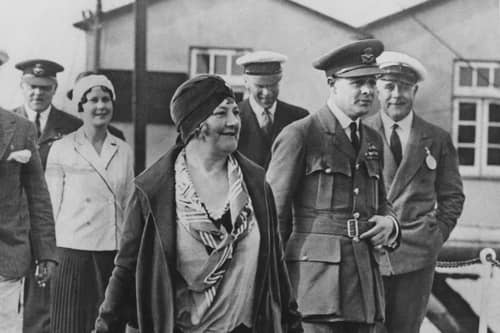
Though separate from the Tate, its chair has always been the director of the Tate, the organisation which benefits most from the activities of the Patrons of New Art. Every year, Sir Nicholas Serota, pictured, selects the Turner Prize judges who select the shortlist of artists, one of which is chosen to be the Turner Prize winner at the final judging session which Sir Nicholas chairs. The Turner Prize should really be called the Serota prize, because it reflects precisely his taste and judgement over the years.
In the cut-throat world of books, such dominance by one individual would not have been tolerated, wither by writers, publishers or the public at large. But Serota gets away with it in art, partly because the Tate has become so excessively powerful - few public curators and even fewer private dealers would dare contradict it - but even more so because the public in fact never got a look into the process.
They don't vote with their feet, still less with their pockets, for the artists short-listed for the Turner Prize. If they had, Beryl Cook and Jack Vettriano would long ago have run away with the cheque. As far as the general public is concerned, the Turner contenders are no-nos and likely to remain so unless they happen to be outlandishly drunk or daft.
The current shortlist fails even on that sorry score. Jim Lambie creates coloured striped floors that might be good to dance on in a cleverly-lit disco, but don't bear aesthetic examination in the cold light of day. Darren Almond has erected modern bus shelters that are supposed to stimulate thoughts about the Holocaust, but, in fact, capitalise on that tragedy rather than adding to our understanding of it in anyway. Simon Starling drove a moped across Andalucia powered by bottled hydrogen - hardly an original ecological action - producing water as a waste product which he used to paint a dispirited portrait of a cactus. Gillian Carnegie paints self-consciously drab pictures of even more dispirited flowers.
The Turner prize is almost dead. The sooner it gives up the ghost the better it will be for all of us. A revived prize, that focuses on specific works of art and which isn't in the gift of one man, and which involves the public in some way, might even be good for art.
Julian Spalding is a former director of Glasgow Museums and Art Galleries.
The full article contains 911 words and appears in The Scotsman newspaper.
-
Last Updated:
03 June 2005 8:53 AM
-
Source:
The Scotsman
-
Location:
Edinburgh
-
Related Topics:
Turner Prize